Concept
Overpacked
A concept for a group travel app. I wrote the vision and prototyped the scan, then found most features already existed and changed course.
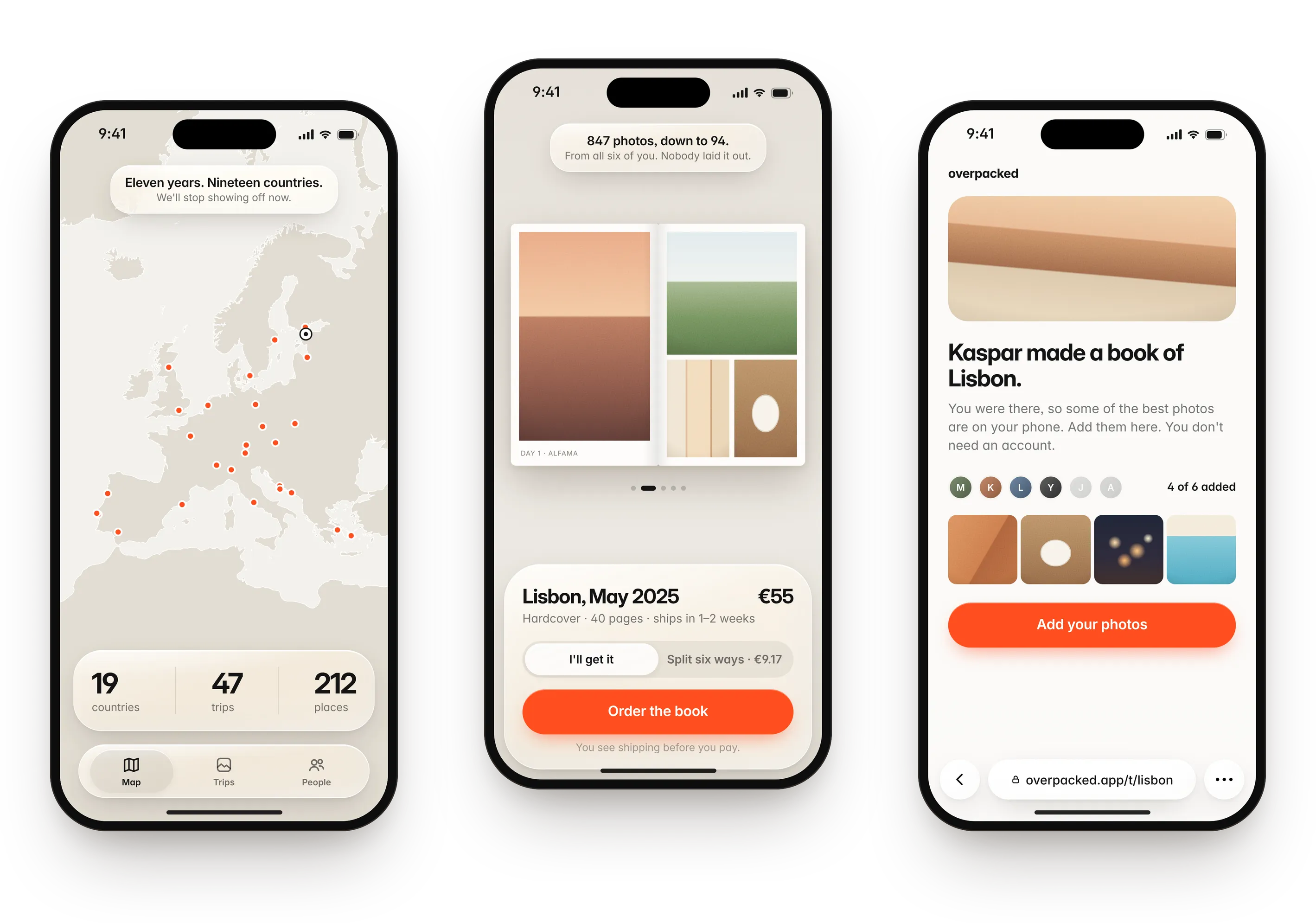
Short version
Overpacked started as a social travel app, with a lifetime map built from your camera roll and a record of who you travelled with. I prototyped the scan in SwiftUI, then ran a full research pass before writing more code. It found five of my six features already shipped by someone else, and my growth plan broken by iOS 18. The one unclaimed idea was a photo book made from the whole group's photos. I reworked the concept around it, then shelved it.
Problem
After a group trip the photos sit on six phones. Someone says they’ll make an album, and nobody does. The money gets split in one app, the plan lives in another, and the group chat buries both within a week.
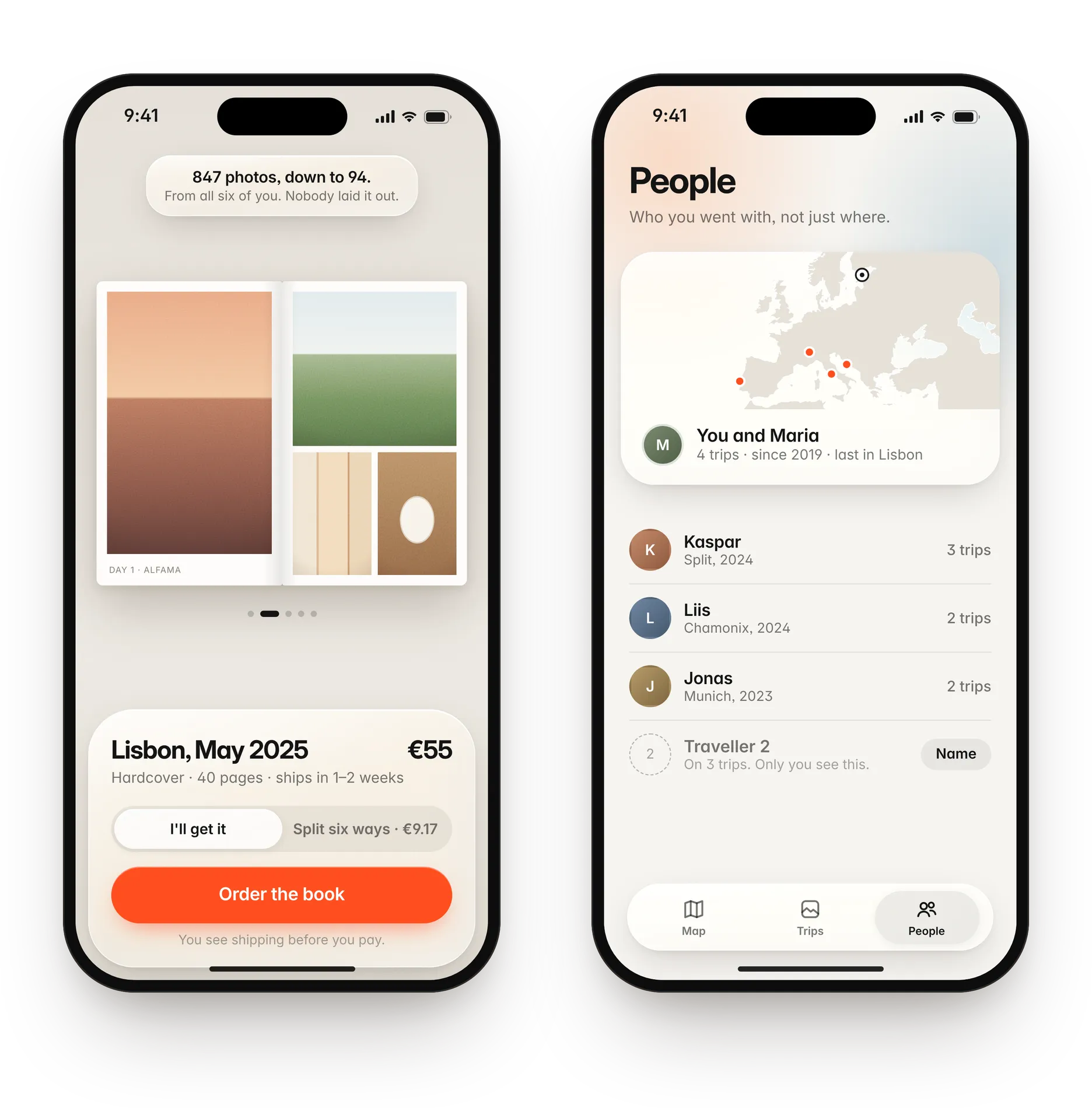
I wanted one app that kept the whole trip. It would also keep something no other app keeps, which is who you were with. Your map would show places, and next to them the people. You and Maria, four trips, last in Lisbon.
Constraints
There weren’t any from outside. Overpacked was my own concept, with no client, team, deadline or budget.
Approach
The first version, written in July 2026, had four layers: a lifetime map and passport, a live mode for the group during the trip, a memory layer ending in a printed book, and affiliate offers on top.
The first thing anyone would see was the scan. Before signup, the app reads the location tags already in your photos and draws every trip you’ve taken. I built that part in SwiftUI. It works out where home is from where you take the most photos, treats days far from home as travel and groups them into trips. It all runs on the phone, with no backend.
Each trip then becomes a group object. The organiser drops a link in the group chat, and everyone else adds photos from the browser with no account and no install. Splitwise makes every member install before they can join, and that’s the step where groups fall apart.
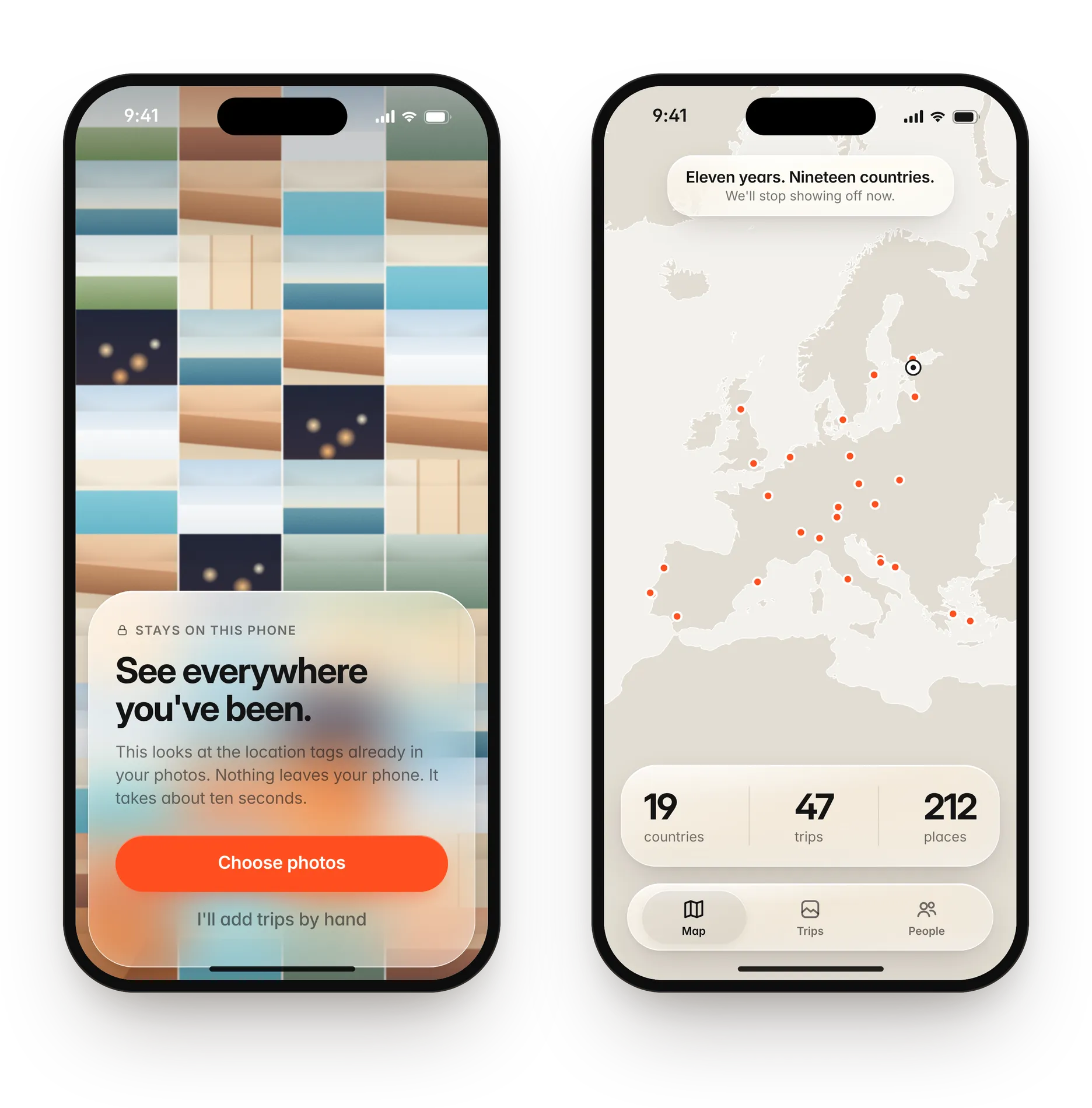
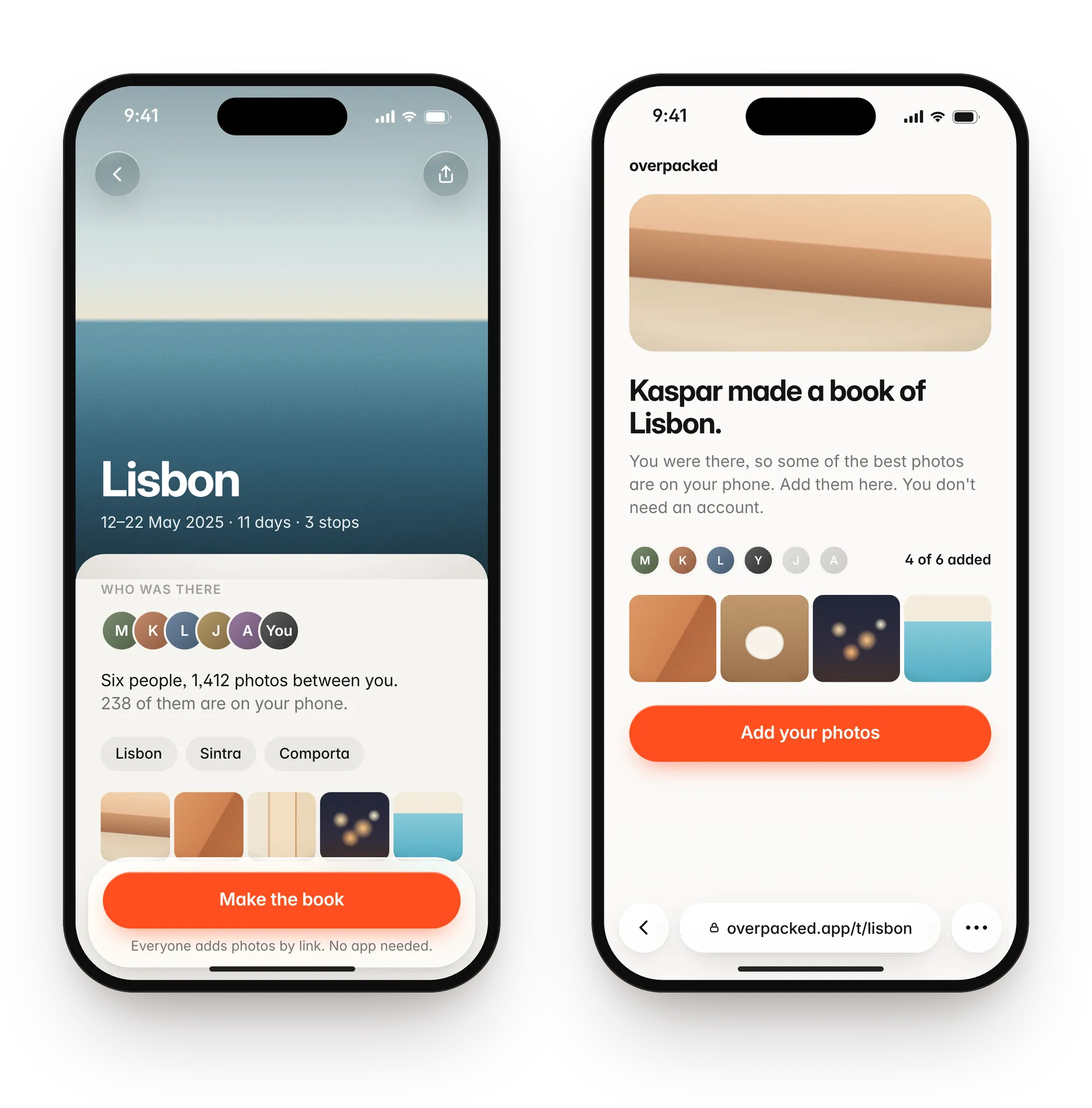
Before writing more Swift, I ran a full validation pass: market sizing, 15 competitor profiles, regulation, unit economics and a scorecard, with a source on every claim.
Decisions
Make the book the product
- Ruled out
- Map and co-travel graph first, book as an upsell
- Went with
- Group book first, map as the reason to come back
The research found one feature with no shipped competitor anywhere: a book built from every group member’s photos, laid out automatically. Polarsteps sells books, but each one holds a single person’s photos. That’s their data model, not a missing feature. Books are also the one proven way to make money in this category, and Apple takes no commission on physical goods. The map stays in the app. It just stopped being the pitch.
No invite gate
- Ruled out
- Unlock the app by inviting friends, like BeReal and Lapse
- Went with
- Shared links and a home-screen widget, like Locket
My growth plan copied BeReal’s gate, where you invite friends to unlock the app. Apple changed contact permissions in iOS 18, and most apps that relied on the gate have since died or dropped it. Locket reached 9M+ daily users with no gate at all. I’d rather give up the viral trick than build on a mechanic Apple has already closed.
When it broke
The research took my own vision document apart.
Five of my six distinctive features had already shipped. Lense has the trip camera whose photos develop after the trip, with 100,000+ users. Retro raised $21M on camera-roll nostalgia. Pin Traveler has the map with friends. SplitSnap splits receipts item by item. Passage shipped photo-to-map in April 2026 and has three ratings, which suggests a scan alone doesn’t pull people in.
I had described Polarsteps as a solo travel diary. It already lets six people co-own a trip, and it’s profitable at 20–22M users.
The part I cared about most, a record of who you travelled with, came up in no review, forum post or survey that eight research agents went through. That doesn’t prove nobody wants it. It means I was the only evidence.
| First version | After research | |
|---|---|---|
| Lead feature | Lifetime map and who you travelled with | A book made from the whole group’s photos |
| The map | Front door | Reason to come back between trips |
| The camera | What makes it different | Where the book’s photos come from |
| Growth | Invite gate, like BeReal | Links and a widget, like Locket |
Next
I shelved Overpacked after the research. If I pick it up again, I’d start with the group photo book, since it’s the one part nobody has shipped.
What I’d change is when I talk to people. Before writing the vision document, not after building the prototype.