Sprint week
VibeCheck by Visa
A checkout-time check that shows Gen Z what an impulse buy costs in the things they care about, built in a five-day design sprint for Visa.
- Open brief to clickable prototype
- After5 days
Short version
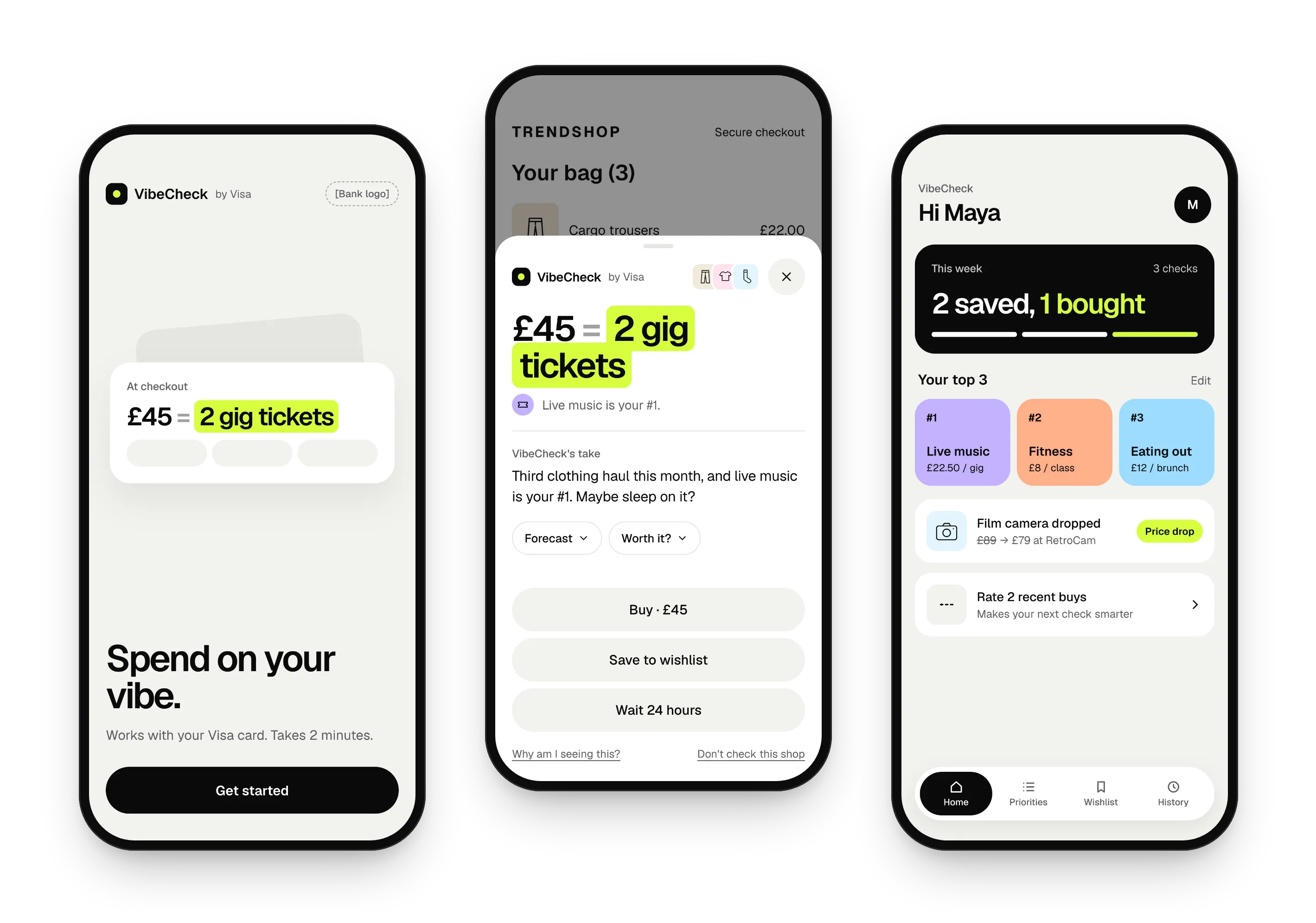
VibeCheck by Visa shows a Gen Z cardholder what a non-essential purchase costs in the things they care about, just before they pay. We took it from an open brief to a written spec and a clickable prototype in five days.
Problem
Visa’s brief was open. What’s a valuable problem to solve for Gen Z in the financial space? It asked us to consider the AI experience and the current ecosystem of partners.
By the third day we had narrowed it to one target.
Show Gen Z what an impulse buy costs them in terms of what they really care about, right before they pay.
Constraints
Most of the design came from five facts about what the system can and can’t know.
- Card data shows where you spent, not what you bought.
- Card authorisation happens after the decision to buy is already made.
- Inferring someone’s interests from their spending counts as profiling under UK GDPR.
- Nudges that feel judgemental get ignored.
- Visa is a network, not a bank. The issuer owns the customer and holds the money.
Approach
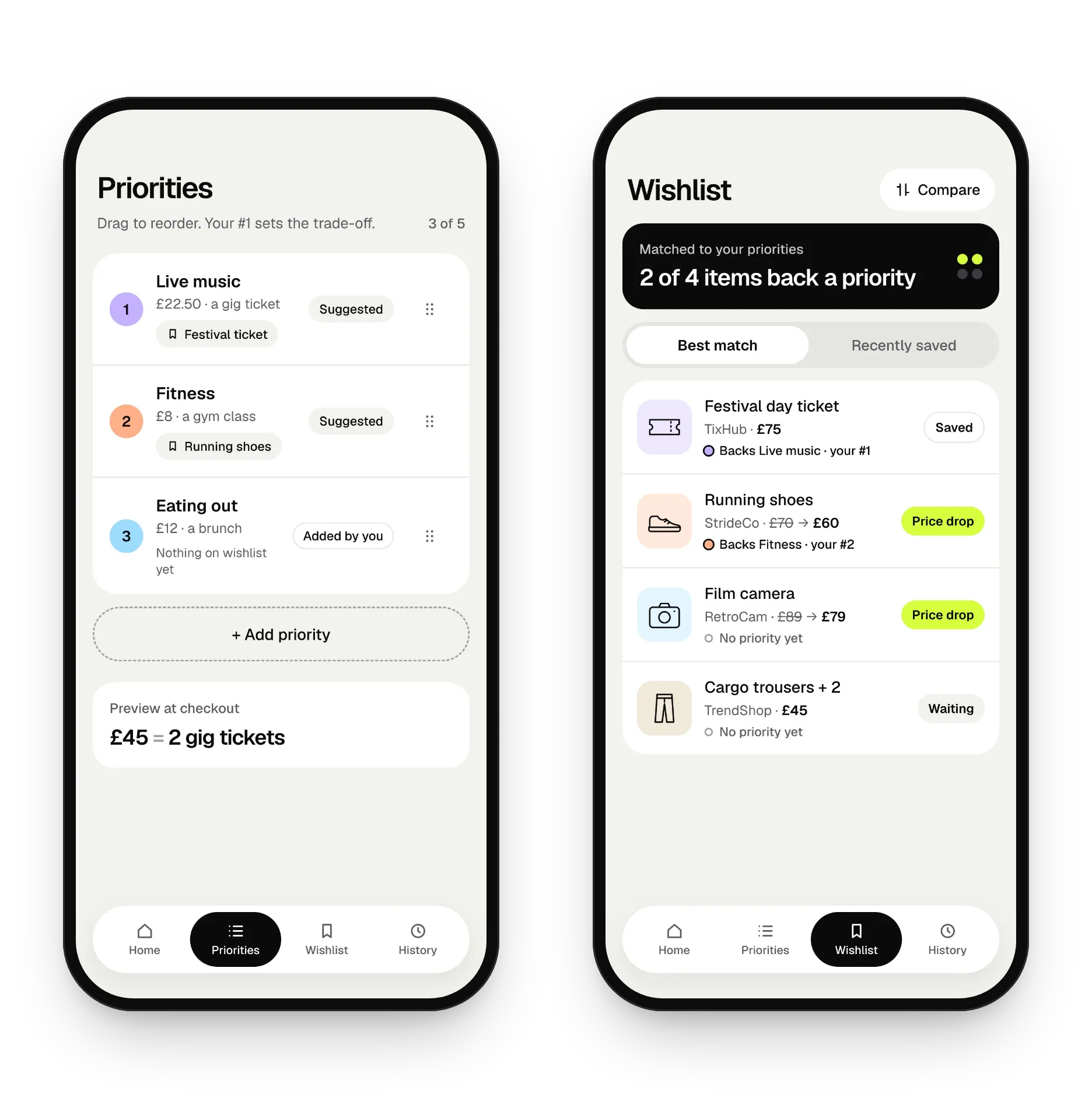
VibeCheck compares what you’re about to buy with the priorities you’ve set and your wishlist. The checkout check is the core of it, and in the prototype it runs like this.
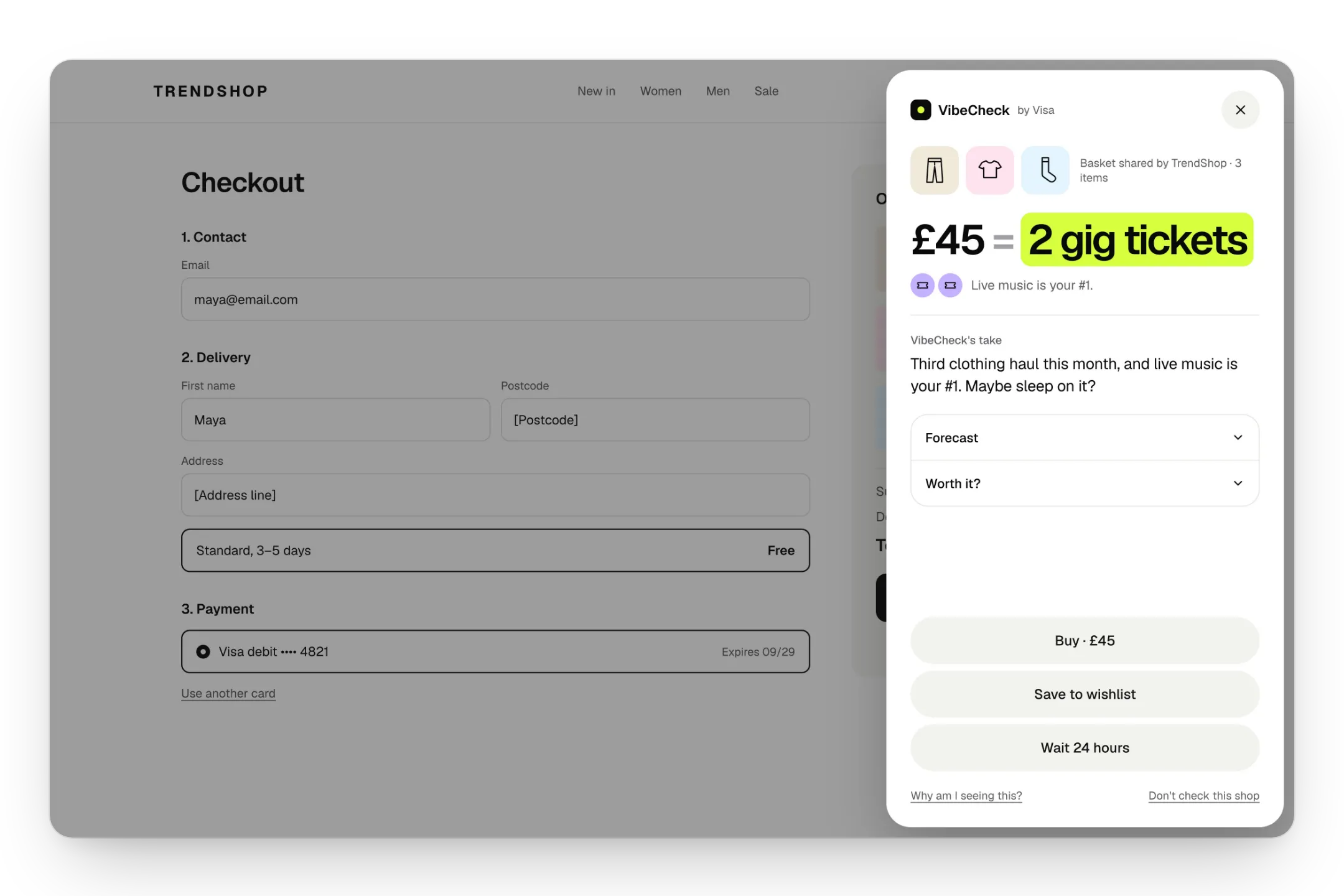
- Before payment, VibeCheck compares the basket with the user’s priorities and wishlist.
- It shows the trade-off in their own terms, like “this £45 = 2 nights in Lisbon” or “this is on your wishlist and £10 cheaper than last week”.
- Two optional views add context. Forecast shows how the purchase is likely to feel later, and Worth It? shows the user’s own ratings of similar past purchases.
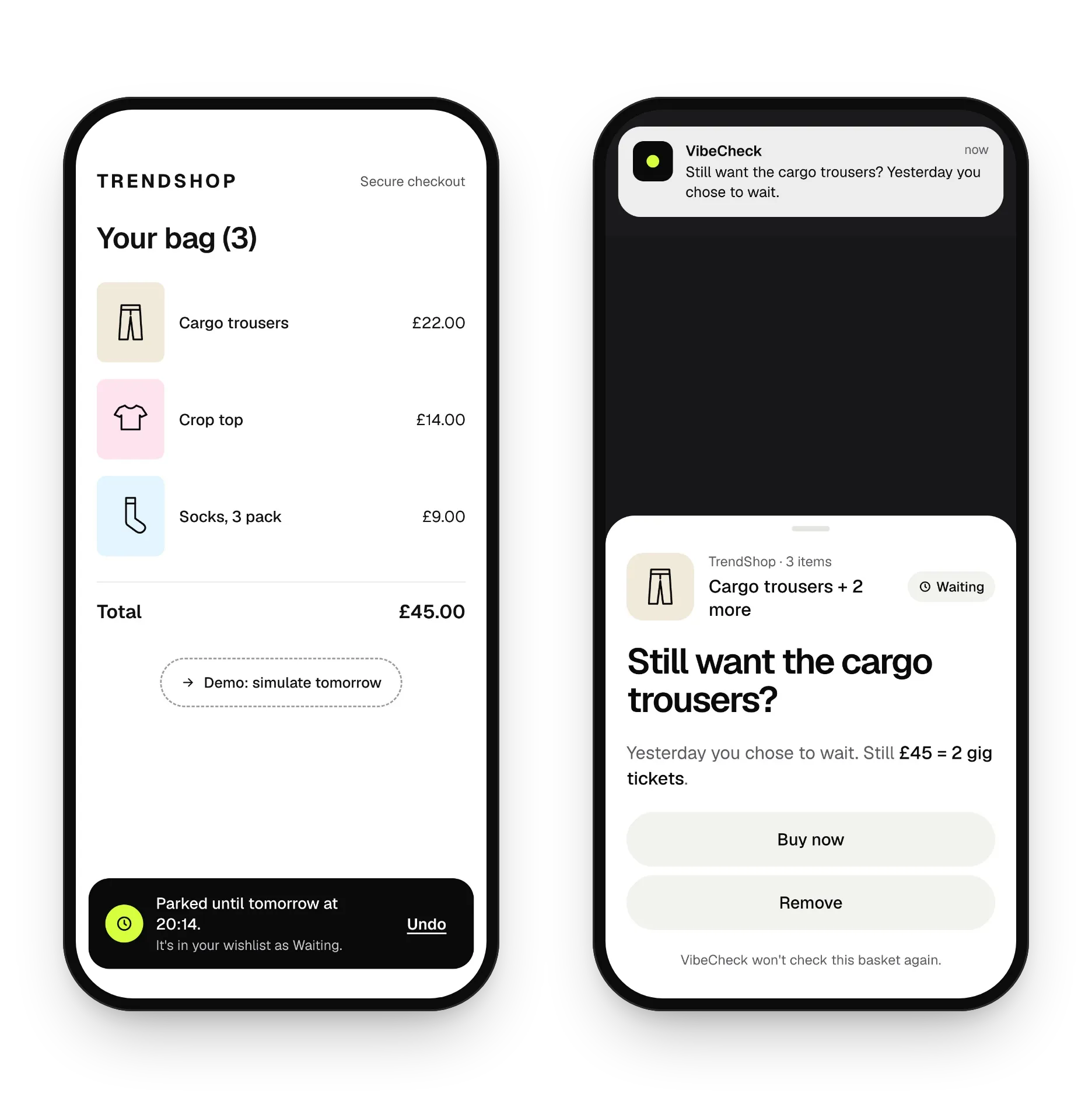
- The user picks buy, save to wishlist, or wait 24 hours. Buying is always one tap away.
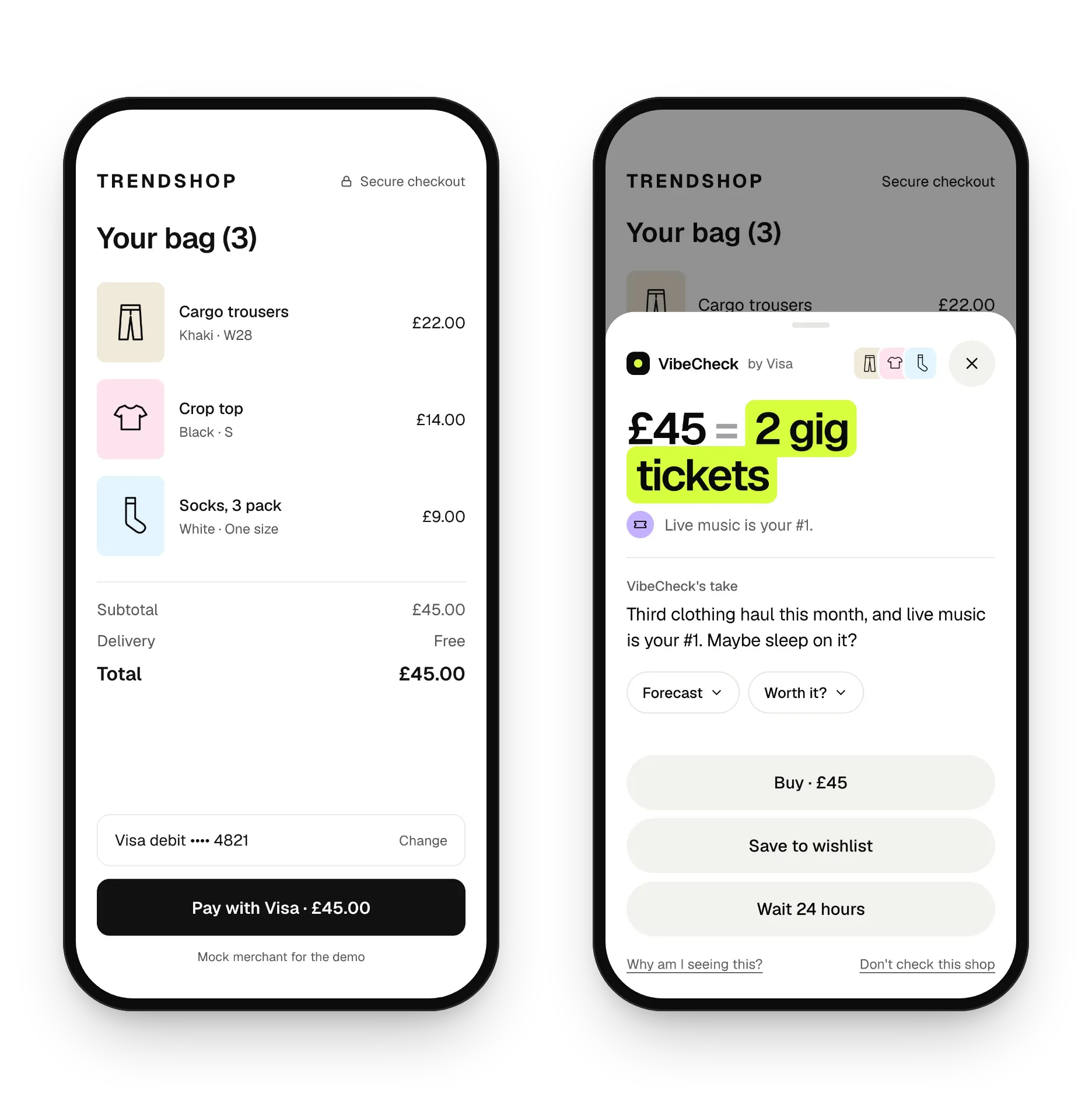
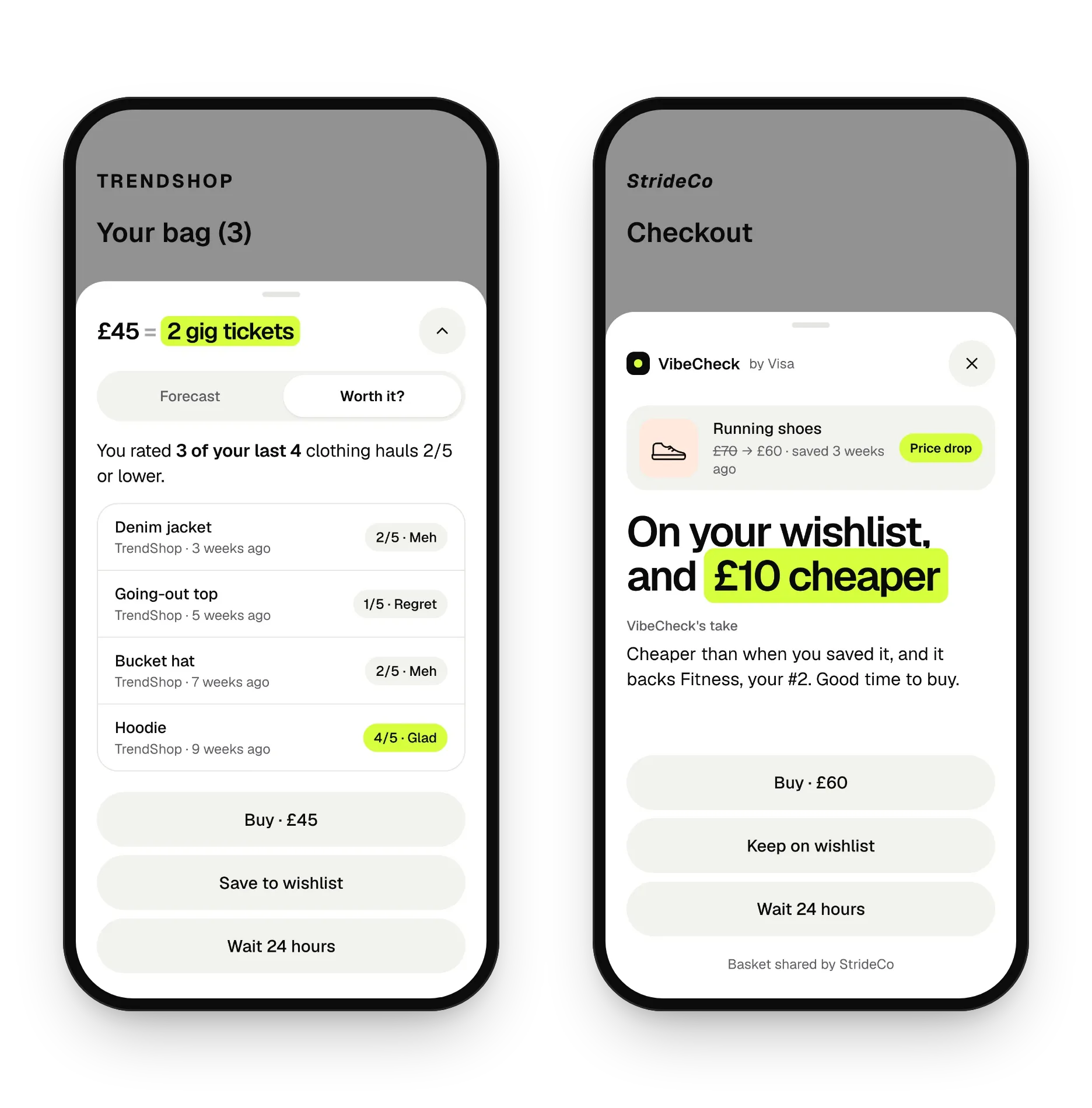
We built the checkout sheet first, because every other screen exists to feed it. The prototype was built in Kiro, an agentic coding tool, from a written spec instead of ad-hoc prompts. The spec covered screens, copy, states and seed data.
Decisions
Check before payment, from the basket
- Ruled out
- Insights on the statement afterwards
- Went with
- A check inside checkout, from basket data
Card data has no line items, and by the time a payment is authorised the decision is already made. A statement insight would only need data the issuer already has, but it arrives too late to change anything. So the check runs inside checkout and reads the basket the shop shares, in an app, at online checkout or inside an AI agent. The cost is that it only works where a shop shares its basket.
AI suggests, the user confirms
- Ruled out
- Infer the profile from spending
- Went with
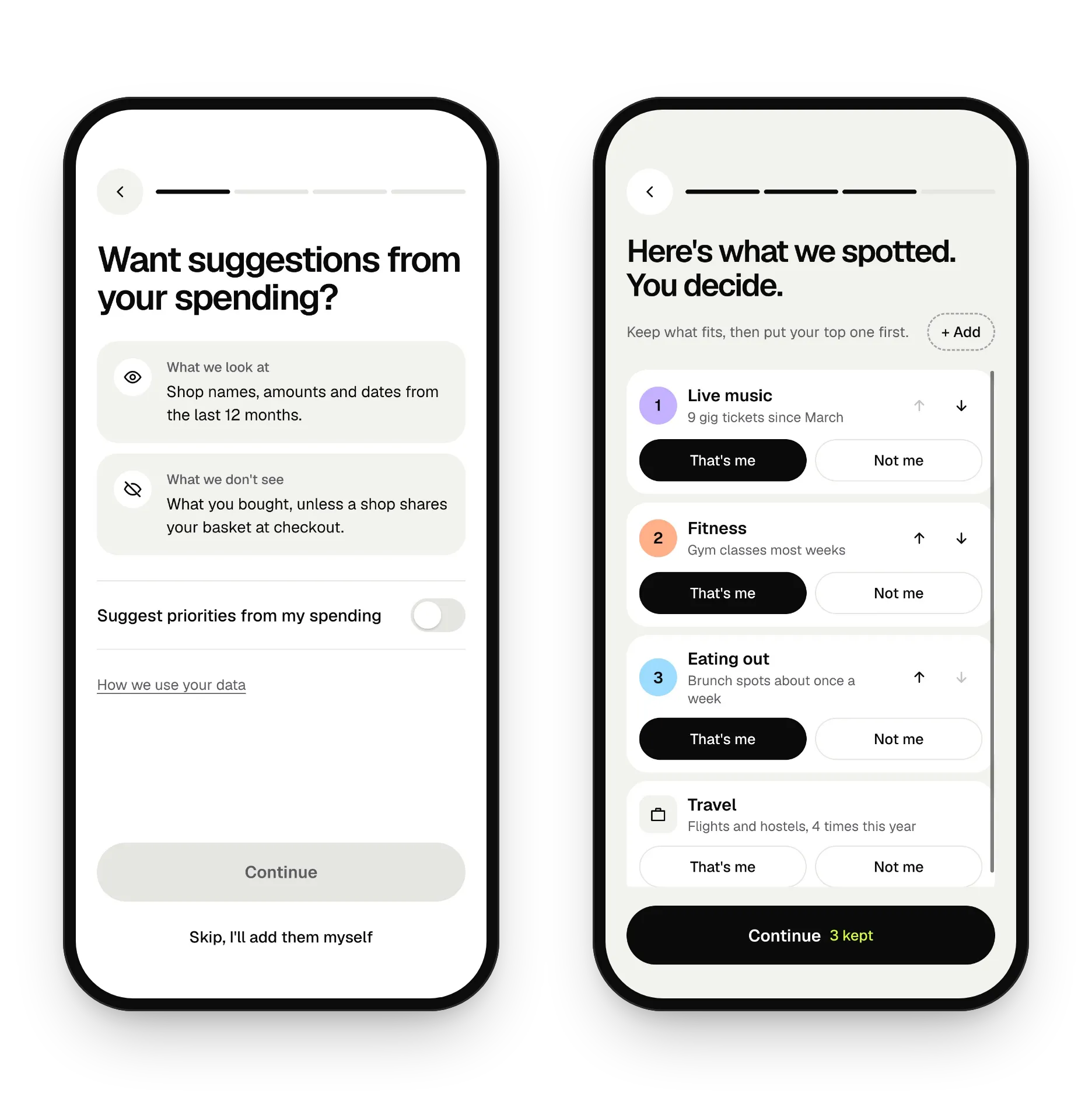
- AI suggests priorities, the user confirms each one
Inferring interests from spending is profiling under UK GDPR. So consent is a required step in setup, and the AI only suggests priorities. The user confirms, edits or deletes each one. Setup gets longer, and that’s the price.
Never block a purchase
- Ruled out
- Hard spending limits
- Went with
- Never block, always offer a choice
Nudges that feel judgemental get ignored, and a blocked payment is as judgemental as it gets. The check always offers buy, save to wishlist or wait 24 hours, and buying stays one tap away. That means the check can only persuade. It never stops anyone.
Issuer owns, Visa supplies
- Ruled out
- A standalone Visa app
- Went with
- A feature issuers add to their own apps
Visa is a network, not a bank. The issuer owns the customer and holds the money. So Visa supplies the feature ready-made and banks add it without building it, and “by Visa” keeps Visa’s name in front of the cardholder. Visa gives up owning the relationship with the user.